
This workshop will explore the intersection of artificial intelligence and theoretical computer science.
Through invited talks, a panel discussion and a poster session, we hope to foster a community-wide dialogue on
whether and how AI can augment our current methodologies or redefine how we approach research in theoretical computer science.
Invited Speakers
In-Person Speakers

Virtual Speakers

Panel Discussion
The panel will feature a number of established researchers who will share their perspectives on how they see AI influencing the future of theoretical computer science.
Confirmed Panelists:
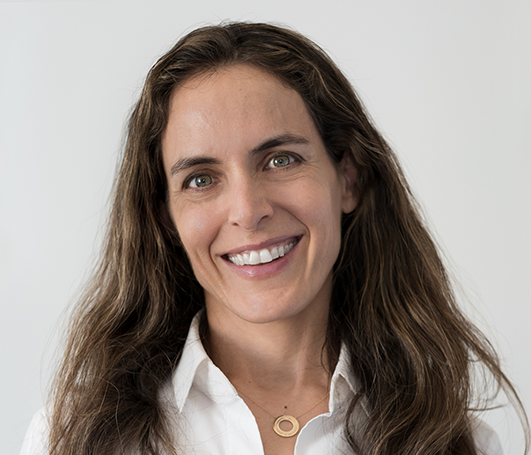
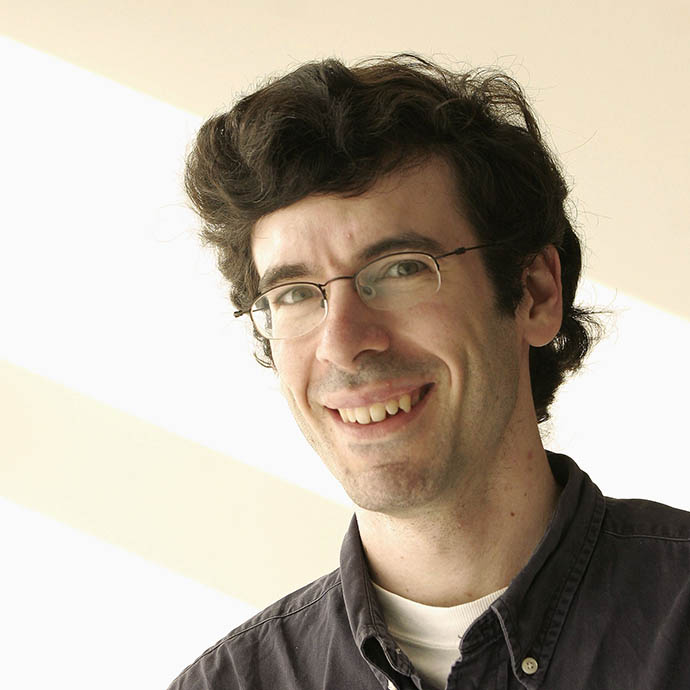
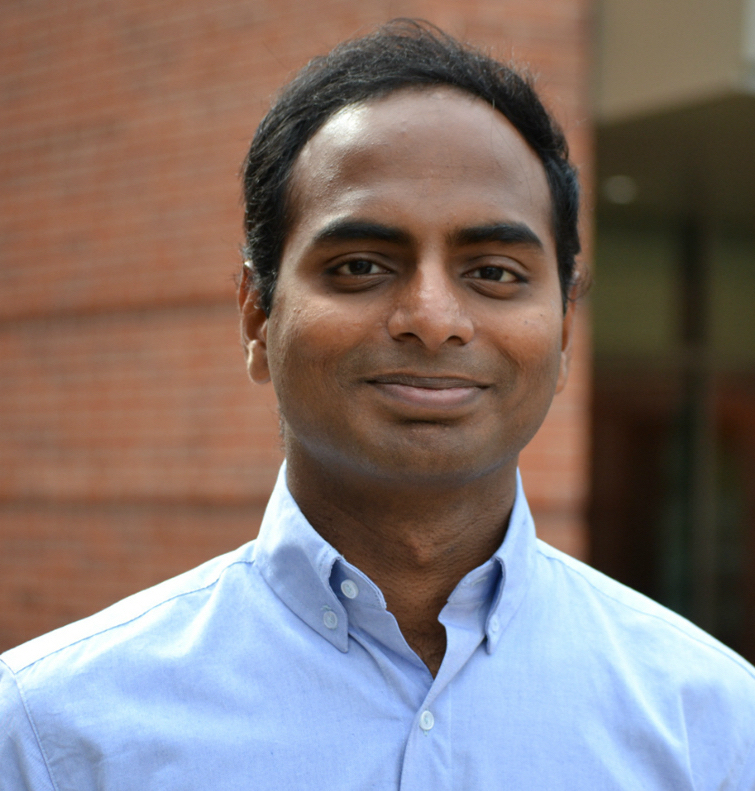
Organizers
- Pritish Kamath (Google Research)
- Pravesh Kothari (Princeton)
- Mariana Raykova (Google)
- Abhradeep Thakurta (Google Deepmind)
- Nikhil Vyas (Open AI)
Accepted Posters
-
Finding Short Paths on Simple Polytopes
Alexander E. Black and Raphael Steiner
[arXiv] -
Learning Randomized Reductions
Ferhat Erata, Orr Paradise, Thanos Typaldos, Timos Antonopoulos, ThanhVu Nguyen, Shafi Goldwasser, Ruzica Piskac
[arXiv] -
Assumption Search, Not Proof Search: AI Assistance for Theory-Oriented Social Science
Heikichi Hayashi, Shawn Yu, Huanxi Zhang, Jiazhuo Li, Ruoran Lai -
Algolean : Most Models are Query Models
Shreyas Srinivas, Tanner Duver, Eric Wieser (+ contributors listed on Github repo)
[Website] [Github] -
Semi-Autonomous Search for Quantum Walk Speedups via a Numerical Sieve
Pradeep Niroula
-
Bolzano: Case Studies in LLM-Assisted Mathematical Research
Martin Balko, Jan Grebík, Pavel Hubáček, Martin Koutecký, Matěj Kripner, Václav Rozhoň, Robert Šámal, Adrián Zámečník
[arXiv] [Website] -
Discovering Expert-Level Nash Equilibrium Algorithms with Large Language Models
Hanyu Li, Dongchen Li, Xiaotie Deng
[arXiv] [GitHub] -
On a Conjecture for Parameterized st-Orientations
Charalampos Papamanthou
[arXiv] -
Adapting AlphaEvolve to Optimize FHE and Other Crypto Primitives
Shruthi Gorantala, Jianming Tong, Asra Ali, Baiyu Li, Jonathan Katz, Ben Kreuter, Jeremy Kun, Thomas Steinke, Abhradeep Thakurta, Julian Walker, Amir Yazdanbakhsh
[arXiv] -
Max Cut with Small-Dimensional SDP Solutions
Hsien-Chih Chang, Suprovat Ghoshal, Euiwoong Lee
[arXiv] -
Solving Open Problems in Operations Research Using AI
Eric Fithian, Rad Niazadeh, Pranav Nuti
[Problems] [Solutions] -
AI-Guided Discovery for #EO: From the f56 Cubic Potential to an FP Dichotomy
Jincheng Guan, Shuai Shao, Ke Shi
[GitHub] -
Quantifying Theoretical AI Alignment Guarantees: Receiver-Utility Bounds in Bayesian Persuasion
Eric Yachbes, Éva Tardos
[arXiv] -
A Review-Gated Knowledge Base for AI-Assisted Theory Work
Chao Xu
[coverify (Harness)] [cosheaf (Knowledge base)] -
How to run a seminar on Machine Assisted Mathematics
Kunal Marwaha, Henry Yuen (+ friends)
[Website] -
Counterexample to majority optimality in NICD with erasures
Paata Ivanisvili, Xinyuan Xie
[arXiv]
Call for Posters
We seek poster submissions that explore the intersection of artificial intelligence and theoretical computer science. Topics of interest include, but are not limited to:
- AI-assisted proof search and algorithm discovery,
- Agentic harnesses for accelerating theoretical research,
- Formalization of proofs (e.g. in Lean, Rocq, Isabelle, etc.),
- Exploration of effective human-AI collaboration.
These could be related to any domain of interest to theoretical computer science or mathematics.
We welcome contributions from researchers and practitioners across all backgrounds, including academia and industry. If you are uncertain whether your research fits the exact scope, we strongly encourage you to submit regardless!
Key dates:
- Submission deadline: May 29, 2026 (AoE)
- Notification: June 10, 2026
The poster submission is closed. Accepted submissions are listed above.
Program
| Time | Session |
|---|---|
| 08:00 - 09:00 | Coffee and Breakfast |
| 09:00 - 09:15 | Opening Remarks |
| 09:15 - 10:00 | Scott Aaronson Are We Cooked?
Abstract: I will describe some recent case studies of using GPT 5.5 Pro to help solve open problems in quantum complexity theory, and reflect on what theoretical computer science might look like going forward.
|
| 10:00 - 10:30 | Prabhakar Raghavan (virtual) Some early successes and learnings in LLM-assisted Math and Theory |
| 10:30 - 11:00 | Sébastien Bubeck (virtual) Probability, combinatorics & optimization from GPT-5 to GPT-5.5
Abstract: I will describe five moments that changed how I think about AI and mathematics, with the first one being when GPT-5 was released and the most recent one with GPT-5.5.
|
| 11:00 - 11:45 | David Woodruff The AI Review Process and Beyond
Abstract: I will discuss the results of the STOC 2026 experiment, where we used inference time scaling on top of Gemini-based models
(specifically advanced versions of Gemini Deep Think) to give authors pre-submission feedback, which has now been expanded and deployed at ICML and NeurIPS
(see blog).
I will then discuss how this system was also used as a key verification tool used by researchers to solve open problems, refute conjectures, and generate new proofs across diverse areas in theoretical computer science, as well as other areas such as economics, optimization, and physics, as described here. |
| 11:45 - 13:15 | Lunch (provided) |
| 13:15 - 14:00 | Mark Sellke Disproof of the Unit Distance Conjecture
Abstract: I will discuss the recent disproof of the unit distance conjecture due to an internal model at OpenAI.
|
| 14:00 - 14:30 | Carina Hong (virtual) Frontiers of AI for Math and Lean Formalization |
| 14:30 - 15:00 | Coffee Break |
| 15:00 - 16:30 | Mohammed Abouzaid, Yael Kalai, Jon Kleinberg, Raghu Meka Panel Discussion |
| 16:30 - 18:00 | Poster Session |